Hydrogen Nanobubbles: Tiny Bubbles With Big Health Potential

A 2007 Discovery That Sparked Today’s Hydrogen Research

In 2007, before hydrogen water became a global wellness trend, scientists discovered something fascinating: hydrogen nanobubbles. These are bubbles so small measured in nanometers that you can’t see them even under most microscopes. The researchers created them using water electrolysis, where electricity splits water into hydrogen and oxygen.

What they noticed was striking: the more nanobubbles in the water, the easier electricity flowed. In other words, these tiny bubbles were actively changing the energy of the water itself.

At the time, this was mainly seen as a chemistry curiosity. But today, we know it was the foundation for understanding hydrogen’s powerful therapeutic potential.


Why Nanobubbles Matter for Health

image: https://www.mdpi.com/1996-1944/14/8/1823

Here’s the challenge with hydrogen: as a gas, its molecules are extremely small and light, so in normal water it escapes quickly into the air. That means regular hydrogen water can lose its potency within minutes.

Nanobubbles change that story.

  • More stable: Unlike free hydrogen that vanishes fast, nanobubbles remain suspended in water for hours or even days thanks to surface charge and internal pressure.

  • Gradual release: Nanobubbles hold hydrogen gas and release it slowly, giving your body more time to absorb it.

  • Better absorption: Because nanobubbles are so tiny, they can interact with cell membranes more efficiently, improving how hydrogen gets into your body.

  • Richer hydrogen water: The more nanobubbles present, the higher the concentration of usable hydrogen, boosting potential therapeutic effects.

So while the original 2007 study focused on how nanobubbles affect electricity, we now understand that they also help hydrogen water stay potent longer and enhance absorption in the body.


The Kangen® K8: Bringing Lab Science Into Your Kitchen

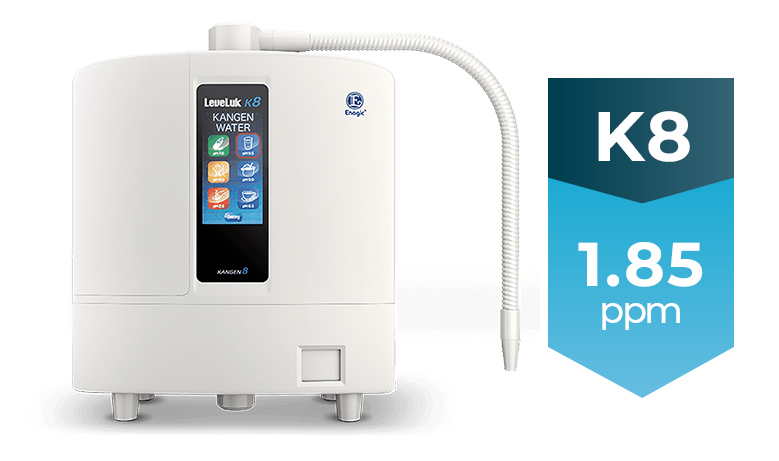
Fast forward to today, and this science is no longer confined to research labs. Devices like the Kangen® K8 water ionizer are designed to create water loaded with hydrogen nanobubbles.

The K8 has a very high electrical charge, which translates to producing an abundance of nanobubbles during electrolysis. The result? Hydrogen-rich water that stays active longer and is better absorbed by your body.

For people seeking the wellness benefits of hydrogen like reduced fatigue, faster recovery, better hydration, and cellular protection the K8 delivers them in an everyday, practical way.

From Discovery to Daily Wellness

  • 2007: Scientists discover hydrogen nanobubbles can boost energy flow in water.

  • Now: We know nanobubbles also enhance hydrogen stability and absorption, amplifying its therapeutic potential.

  • Everyday life: With products like the K8, you can drink hydrogen-rich water full of nanobubbles daily bringing advanced science into your home.


Final Thought

What started as a scientific curiosity has grown into a wellness breakthrough. Hydrogen nanobubbles are more than just tiny bubbles they’re tiny powerhouses. By preserving hydrogen longer and improving absorption, they make hydrogen water not only more effective but also more accessible to anyone who wants to support their health at the cellular level.


To see how hydrogen interact with your cells for therapeutic benefit, click here.

For various research studies on different diseases and how hydrogen positively acted as therapeutic benefits, click here.
How Your Body Uses Molecular Hydrogen from Hydrogen-Rich Water

What’s the Buzz About Hydrogen-Rich Water?

Imagine a special kind of water that has extra hydrogen gas dissolved in it this is called hydrogen-rich water. Scientists have been studying whether drinking it helps reduce oxidative stress, which is a type of damage caused by harmful molecules called reactive oxygen species, or ROS for short. These ROS can harm your brain, heart, and other parts of the body.


The Study at a Glance

Researchers led by Shimouchi and colleagues wanted to figure out what happens to the hydrogen you drink. Do you breathe it out? Do you sweat it out? Or does your body actually use it?

What They Did

  • Seven healthy adults drank hydrogen-rich water.
  • Scientists measured how much hydrogen came out when they exhaled using a device that detects tiny amounts of gas.

What They Found

  • Within 10 minutes of drinking, hydrogen in their breath peaked at about 36 parts per million (ppm).
  • Over the next hour, it dropped back to normal.
  • Counting the amount exhaled, about 59% of the hydrogen was breathed out.
  • At most 3% was lost during the experiment itself.
  • Only about 0.1% was lost through the skin.

Bottom line? Around 40% of the hydrogen you drink is actually taken up and used by your body.


What Happens to the Hydrogen Your Body Uses?

Hydrogen doesn’t do much by itself but it can neutralize one of the most dangerous ROS called the hydroxyl radical. This ability makes it a weak scavenger that helps reduce oxidative damage but not against all ROS, like hydrogen peroxide or superoxide.

Based on the amount of hydrogen used, scientists estimated that hydroxyl radicals are being produced in your body at a rate of at least 1.0 µmol per minute per square meter of body surface (about 29 nmol per minute per kilogram). That’s how fast your body generates those harmful radicals something hydrogen may help manage.


Why This Matters And What It Means for You

  1. Your body actually uses some of that hydrogen not just pees it or breathes it out.
  2. It may help to neutralize harmful molecules and reduce oxidative stress.
  3. You don’t need futuristic machines just hydrogen-rich water may have potential benefits.

Final Thoughts

So next time you see “hydrogen-rich water” on a label, you’ll know: it’s not just a fancy drink. About 40% of that hydrogen makes its way into your body where it may help fight off harmful molecules. The rest? Mostly exhaled and just a tiny bit lost through your skin or during handling.

This could open the door to new ways of staying healthy using simple hydration with hydrogen-packed water but more research is still needed before we can say for sure.


Learn more about how it reacts to your body’s cells positively

Check out our products

Could hydrogen water protect your ears from loud noise?

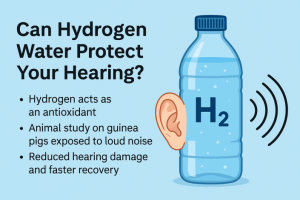
Imagine this: you’re at a concert with booming speakers, or working around loud machinery for several hours. You worry that the noise might hurt your ears and cause hearing loss. What if drinking water infused with hydrogen could help reduce that damage? A study on guinea pigs suggests it might.

Here’s a breakdown of what the researchers did, what they found, and what it could mean (with plenty of caveats) explained simply.


What the researchers wanted to test

  • Problem: Loud noise can damage hearing. Even temporary exposure may cause changes in the inner ear’s “hair cells” (sensory cells that detect sound) or in the nerve pathways. Over time, repeated damage can lead to permanent hearing loss.
  • Hypothesis: Molecular hydrogen (H₂) is known to act as an antioxidant; meaning it can neutralize some of the most harmful reactive oxygen species (like free radicals) in the body. The study authors thought that if you supply extra hydrogen (via hydrogen-rich water), it might reduce the oxidative damage caused by loud noise.
  • Goal: To see if drinking hydrogen-rich water before noise exposure could reduce or speed recovery from noise-induced hearing loss tested in guinea pigs.

How the experiment worked:

  1. Groups & treatment
    They had two groups of guinea pigs:

    • One group drank normal water.
    • The other group drank hydrogen-rich water (water with extra molecular hydrogen dissolved in it).
  2. Pretreatment period
    The guinea pigs drank their assigned water (normal or hydrogen water) for 14 days before noise exposure.
  3. Noise exposure
    After the 14 days, both groups were exposed to very loud noise: 115 decibels (dB) at 4 kHz (a certain frequency band) for 3 hours.
  4. Hearing tests before and after
    They measured hearing at different times: before the experiment (baseline), then immediately after noise, and then 1, 3, 7, and 14 days later. They used two types of hearing tests:

    • ABR (Auditory Brainstem Response) checks how sound signals travel through the auditory nerve to the brainstem.
    • DPOAE (Distortion Product Otoacoustic Emissions) checks how well the hair cells in the inner ear are working, based on the sounds the ear itself emits in response to stimulation.
  5. Data comparison
    They compared how hearing thresholds (how quiet a sound still triggers a response) and hair cell function recovered over time in the hydrogen group vs. the control (normal water) group.

What they found

  • After noise exposure, hearing got worse in both groups (as expected).
  • However, the hydrogen-water group fared better during recovery:
    • On days 1, 3, and 14 after noise, the ABR thresholds (i.e. how loud a sound had to be to detect it) were significantly better in the hydrogen group than in the control group. In other words: less hearing loss, or faster recovery.
    • The DPOAE tests (indicating hair cell function) also showed stronger recovery in the hydrogen group. On days 3 and 7, the hydrogen group had significantly higher amplitudes (better function) compared to controls.
  • The authors concluded that hydrogen may help protect hair cells in the ear from damage and speed up recovery from noise-induced temporary hearing loss.

What this means (and what it doesn’t)

What it suggests

  • The results are promising: supplying molecular hydrogen before noise exposure might reduce damage or help the ears recover faster.
  • If this works in humans (which is not proven yet), perhaps hydrogen-rich water or other hydrogen therapies could be part of a strategy to protect hearing in noisy environments (concerts, workplaces, etc.).
  • It underscores how oxidative stress (damage from reactive oxygen species) is part of how loud noise harms hearing. If you can control oxidative stress, you might reduce damage.

What we don’t know / limitations & cautions

  • Animal study: The experiment was done in guinea pigs, not humans. Animal models provide important insights, but what works in animals doesn’t always translate to people.
  • Dose, timing, safety: It’s unclear how much hydrogen is needed, when best to take it, or whether there are side effects in humans.
  • Long-term effects: The study looked at relatively short-term recovery (up to 14 days). It doesn’t show if hydrogen prevents permanent hearing loss under repeated or extreme noise.
  • Mechanism: While hydrogen is known to have antioxidant properties, the precise way it protects the ear is not fully mapped out.
  • Practicality: Drinking hydrogen-rich water might help, but how much, how often, or whether other delivery methods are better is unknown.

For more research articles, please check out our research articles page.

To understand hydrogen on a cellular level, check out this page.

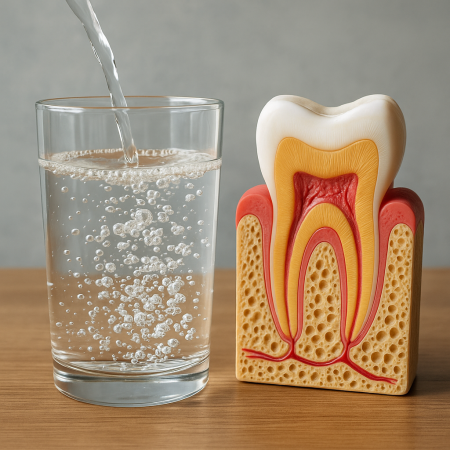
Can Drinking Hydrogen-Rich Water Help Fight Gum Disease?

Gum disease (also called periodontitis) is when the tissues around your teeth especially your gums and the bone beneath get inflamed, damaged, or even lost over time. It often begins with bacteria building up in your mouth, but part of the damage comes from something called “oxidative stress” in simple terms, harmful molecules called “reactive oxygen species” (ROS) that damage cells when they accumulate.

A scientific study in rats explored whether drinking hydrogen-rich water (water with extra hydrogen molecules dissolved in it) could reduce the progression of gum disease. Let me explain what they found in a way that’s easy to grasp.


What the Scientists Did

  1. Creating Gum Disease in Rats
    The researchers put small ligatures (like tiny threads) around the molars of rats for 4 weeks. This causes irritation and leads to gum inflammation, helping mimic periodontitis.
  2. Two Groups: With or Without Hydrogen Water
    • One group of rats drank normal water.
    • The other group drank hydrogen-rich water.
  3. What They Measured
    • Levels of ROS (those harmful molecules) in the blood.
    • Signs of inflammation and damage in gum tissues (for example, how many inflammatory cells showed up, and how much bone was lost around teeth).
    • Activity of certain cellular “signaling pathways” that go up when tissues are inflamed.

What They Found

  • In the rats drinking normal water, gum disease progressed as expected: ROS levels rose over time, inflammation increased, and bone loss happened around the teeth.
  • In the rats drinking hydrogen-rich water:
    • ROS levels did not increase as much.
    • Markers of tissue damage and inflammation in the gums were milder.
    • There was less infiltration by inflammatory cells into the gum tissue.
    • There was less activation of the molecular pathways (like MAP kinases) that normally drive inflammation.
    • Bone loss and degeneration around the teeth were reduced compared to the control group.

In essence, drinking hydrogen-rich water helped suppress oxidative stress and dampen the inflammatory response, slowing down the damaging processes seen in gum disease.


Why Does This Matter?

If we translate from rats to humans (with caution!), the study suggests that hydrogen-rich water might help protect gums by:

  • Reducing harmful ROS (so, less “rusting” inside your tissues),
  • Lowering inflammatory reactions,
  • Preventing or slowing bone and tissue damage around your teeth.

It doesn’t mean hydrogen water is a cure, but it opens up a possible supportive approach alongside brushing, flossing, cleanings, and professional treatment.


Things to Keep in Mind

  • This was done in rats, not people. What works in animals doesn’t always translate exactly to humans.
  • The study focused on early to moderate damage; it’s unclear how effective this would be in advanced gum disease.
  • Hydrogen-rich water isn’t a substitute for good oral hygiene or dental care those remain essential.
  • We don’t yet know the ideal amount, concentration, or duration of hydrogen water consumption for humans.

Bottom Line

This research offers a promising hint: hydrogen-rich water may help reduce the harmful molecular stress and inflammation that drive gum disease. While it’s not a magic bullet, it could become part of a toolkit (along with brushing, flossing, and dental checkups) to help protect your oral health.

If you decide to try hydrogen-rich water, talk to a dentist or health professional first and keep up the basics of oral care.

Check out various hydrogen (Kangen®) machines we offer

Want to understand inflammation better? Find out how free radicals and antioxidants affect inflammation in your body!

Hydrogen Water and Metabolic Health

What Happens When You Drink Hydrogen-Rich Water: Simple Science You Can Understand

Many health trends promise big results but how often are they backed by science? One interesting study looked at what happens when people drink hydrogen-rich water. The results suggest it might help your body fight harmful stress, especially for people at risk of metabolic problems. Here’s the story in a way that’s easier to follow.

What Is Metabolic Syndrome, and Why Does Oxidative Stress Matter?

Think of metabolic syndrome as a cluster of risk factors: things like belly fat, high blood sugar, high blood pressure, and bad cholesterol. If you have several of those, your risk of heart disease, diabetes, and other illnesses goes up.

One of the things that worsen these risks is oxidative stress. That’s when there are too many unstable molecules (called free radicals) in your body, damaging cells and tissues. Your body has defenses antioxidant enzymes that neutralize these unstable molecules. But if the damage is too much, things go wrong.

The study’s idea was: if we give the body a boost in antioxidants, maybe we can reduce damage and risk factors related to metabolic syndrome.

The Experiment: What They Did

Here’s what the researchers tested:

  • They recruited 20 people who had signs pointing toward metabolic syndrome but not full-blown disease.
  • For 8 weeks, these people drank 1.5 to 2 liters per day of water that had extra hydrogen dissolved in it.
  • To make the hydrogen-water, they used a special stick made of metallic magnesium. When put into water, it triggers a chemical reaction that releases hydrogen gas into the water.

Throughout the 8 weeks, the researchers monitored markers of oxidative stress, antioxidant activity, and cholesterol levels.

The Results: What Changed Inside the Body

After 8 weeks of drinking this hydrogen-rich water:

  • The activity of SOD (an antioxidant enzyme) went up by about 39%. (That’s good more defense power.)
  • The levels of TBARS (a marker for damaged fats in the body) dropped by about 43%. (That means less damage to fats.)
  • HDL cholesterol (the “good” cholesterol) increased by about 8%.
  • The ratio of total cholesterol to HDL cholesterol improved (meaning your “bad” cholesterol burden compared to the “good” one got better).
  • Interestingly, fasting glucose (blood sugar when you haven’t eaten) did not change significantly.

In short: some markers improved, especially those linked to oxidation and cholesterol, though blood sugar stayed about the same.

Why This Might Be Useful

If results like this are real and reproducible, drinking hydrogen-rich water could offer a simple, low-risk way to help your body fight oxidative damage especially in people already vulnerable to metabolic problems.

Because the method used (magnesium stick) is pretty straightforward and safe, this could offer an accessible approach. But it doesn’t replace good diet, exercise, sleep, or medical care.

What to Keep in Mind (Cautions and Limitations)

  • This was a small, open-label pilot study (only 20 people, no “double blind” setup). That means there was no placebo comparison.
  • Human bodies are complex, and what shows up in short-term markers doesn’t always translate into real-world disease protection.
  • The results were promising, but more studies especially large ones with strong controls are needed.
  • Also, it’s unknown how much hydrogen-rich water women, older people, or people with existing diseases might respond.

What You Can Do (If You’re Curious)

If you want to experiment (cautiously):

  1. Stay within safe, reasonable drinking amounts.
  2. Use a reliable method to produce the hydrogen-rich water.
  3. Monitor your health markers (cholesterol, glucose, perhaps oxidative stress if available).
  4. Don’t stop conventional treatments this should be considered complementary.

Bottom Line

This study suggests that drinking water enriched with hydrogen might help boost antioxidant defenses and improve cholesterol markers at least in people who are in a high-risk, “pre-disease” state. While the findings are fascinating, they’re preliminary. Think of this not as a miracle cure, but as a possible interesting tool in the larger toolbox of health.

For a range of our products, click here.

Check out our previous article on why Kangen® machines are the best investment for your health!

How Molecular Hydrogen Helps Calm Allergies

Discovering How Molecular Hydrogen Can Calm the Immune System
Understanding the Power of Hydrogen for Allergy and Inflammation Relief

Have you ever heard that tiny molecules can make a big difference? Today we’re looking at one such molecule: molecular hydrogen (H₂) that’s just two hydrogen atoms paired together and how it might help regulate our immune system and ease allergic reactions and inflammation.

Why this matters

When you have an allergy (like sneezing, itchy eyes, or swelling), your body’s immune system is going into overdrive. It sees something harmless (like pollen, a food, or pet dander) and reacts as if it were dangerous. That reaction can lead to redness, swelling, or even full-blown allergic symptoms. Finding safe ways to calm down that immune response is a big deal for many people.

What the researchers did

In the study, scientists tested how molecular hydrogen might interrupt the chain reaction in immune cells that leads to an allergic response. Think of it like this: your immune system is a fire alarm system. Something triggers the alarm (the allergen), the alarm sends a signal, and then the sprinklers go off (inflammation and allergic symptoms). The researchers investigated if hydrogen could act like a “circuit breaker” to stop the signal before the sprinklers launch.

The key findings (in simple terms)

  • They found that giving molecular hydrogen reduced the signalling inside those immune cells. That means fewer “alarm signals” were being sent.
  • Because of that, the downstream allergic reaction was smaller fewer inflammatory chemicals, less immune cell activation.
  • In practical terms, this suggests hydrogen can dampen the immune over-reaction without completely shutting the immune system off. That’s important: you don’t want your immune system asleep, you want it balanced.

Why this is exciting

  • It’s simple: hydrogen is a small molecule, easy to deliver in some forms (like hydrogen-rich water or hydrogen gas) though how it’s applied to humans still needs much more research.
  • It’s targeted: the study shows a clear mechanism of action (stopping the signal inside immune cells) rather than just saying “it works” without explaining how.
  • It offers an alternative: many allergy and inflammation treatments suppress the immune system broadly (which can lead to side-effects). If you could more precisely reduce the problematic signalling, you might avoid some of those downsides.

What this doesn’t mean (yet)

  • It doesn’t mean hydrogen is a cure for all allergies. This was early-stage research, mostly in controlled lab settings, not full clinical trials on large groups of people.
  • It doesn’t mean you should replace your doctor’s advice with hydrogen therapy. The study suggests potential, but it doesn’t yet prove safety and effectiveness in everyday use for all types of allergic or inflammatory diseases.
  • It doesn’t mean the effects are automatic or massive. Even though the results are promising, the “circuit breaker” is not a complete shut-off switch just a damping mechanism.

How this fits into the bigger picture of wellness & longevity

If you’re interested in wellness, longevity, hormone health, and keeping your system balanced (like you are, from your other projects), molecular hydrogen might be an interesting tool. It sits at the intersection of biohacking, immune regulation, and wellness maintenance. If you think about your body like a finely tuned machine, hydrogen could be part of the “maintenance kit” helping reduce unnecessary wear-and-tear from chronic inflammation without messing up the machine.

Take-aways for you

  • Think of molecular hydrogen as a potential modulator of immune over-reactions (especially allergic/inflammatory responses).
  • It works by reducing signalling inside immune cells, not by wiping out immune function entirely.
  • It’s early days: promising lab results, but more human research is needed.
  • If you’re building a wellness brand or exploring advanced health tools, hydrogen could be one of many tools in your “wellness toolbox” but it needs to be framed responsibly (not as a miracle cure).
  • For a blog audience (especially young adults or high-school readers), you could position this as “how one simple molecule might quietly help your immune system calm down” that angle is engaging and understandable.

Click here for a deep dive on how hydrogen works in your body

Check out the products we promote that generates the highest content of hydrogen in the marketplace